

There is something slightly deceptive about the sea around Crete. From the surface, it can look almost impossibly inviting — that deep Mediterranean blue, the bright limestone coastline, the small coves opening between the rocks. But once you descend, the island changes completely. The beaches disappear, the noise of the coast fades away, and what you find below is less about colourful tropical reefs and more about rock, light, shadows and an underwater landscape shaped by the same geology that makes Crete so dramatic above the water. Scuba diving in Crete is really about discovering this other side of the island.
The first thing that tends to stay with you when diving in Crete is the visibility. On a good day, the water can feel almost unreal, with the bottom appearing much closer than it actually is and sunlight reaching surprisingly deep. This makes even a relatively simple dive interesting because you are constantly looking beyond the immediate rock in front of you. A wall drops away into blue, a narrow opening leads into a darker section of rock, or a large boulder creates a completely different landscape on the other side. The dive sites in Crete are particularly rewarding if you enjoy exploring rather than simply looking for the largest possible collection of marine life.
That is not to say there is nothing to see. Octopus, moray eels, groupers, wrasse, sea bream, scorpionfish and plenty of smaller Mediterranean species inhabit the rocky bottoms, while caves, overhangs and crevices often reward a slower and more observant dive. But it is worth arriving with the right expectations. Crete is not the Red Sea, and you should not come here expecting enormous schools of brilliantly coloured reef fish at every turn. The attraction is different: the clarity of the water, the shape of the seabed, the contrast between bright blue water and dark rock, and the feeling that there is always another little passage, wall or cavern to investigate. That variety is part of what makes scuba diving in Crete, Greece so interesting for both first-time divers and people who already know their way around a mask and regulator.
The other thing I like about diving in Crete is that it can fit very naturally into a trip around the island. You do not necessarily have to choose between a diving holiday and a holiday in Crete. Depending on where you stay, a morning boat trip or a couple of shore dives can become part of a much bigger day — swimming, eating somewhere good afterwards, exploring a village or simply finding another beach before the sun goes down. And that is probably the best way to think about Crete diving. You are not coming here only to spend a week underwater. You are exploring an island with an unusually varied coastline, and the best dive sites in Crete simply give you another way of experiencing it.
Diving in Crete
The Crete Beneath the Surface: Why Diving Here Feels Different
There is a completely different Crete waiting below the waterline. On land, the island is all mountains, gorges, white limestone and rugged coastlines. Underwater, much of that character continues, but in a quieter and more intimate form. The same rock that makes the coastline so dramatic becomes walls, shelves, narrow passages and caves, with the sunlight moving across them as you descend. You can spend a dive following a bare-looking stretch of rock and suddenly find yourself above a drop into deep blue, or discover a small cavern where the light changes completely. It is less like visiting an underwater aquarium and more like exploring another landscape.
The clarity of the water is a big part of that experience. When visibility is good, the Mediterranean around Crete has a remarkable sense of space. You can look down along a wall and see the rock continuing beneath you, or turn away from the reef and simply disappear into blue. This changes the way you dive. Instead of constantly searching for something spectacular, you begin to notice smaller things: the movement of a grouper beneath an overhang, an octopus tucked into a crack, tiny fish moving together above the rocks, or the sudden appearance of a moray eel from a dark crevice. The longer you stay underwater, the more there seems to be to notice.
And then there are the caves and caverns, which give some dives a completely different atmosphere. Even when you are not doing technical cave diving, entering a shallow cavern or swimming beneath a rock overhang can make the Mediterranean feel almost mysterious. Outside, everything is bright blue; inside, the light becomes softer and the rock takes on a completely different character. These moments are part of what makes diving in Crete memorable to me. They are not necessarily the moments you would put on a list of the island’s “top attractions”, but they are often the ones you remember afterwards.
Crete also rewards divers who are prepared to slow down. Its underwater world is not always immediately spectacular, and that is precisely why I think it deserves more attention. A dive can begin with what looks like an ordinary rocky seabed and gradually reveal its details as your eyes adjust. The Mediterranean has its own rhythm, its own colours and its own kind of beauty. Once you stop expecting it to behave like a tropical sea, Crete starts to make much more sense — and you can begin to appreciate the particular pleasure of exploring a clear, rugged and surprisingly varied underwater landscape.
Where to Dive in Crete: The Best Dive Sites by Region
The best dive sites in Crete are spread across very different parts of the island, and where you choose to dive can change the experience considerably. One of the first things to understand about diving in Crete is that the island is simply too large to treat as one diving destination. A dive centre in Chania is not giving you easy access to the same underwater world as a centre in Agia Pelagia, and neither is particularly convenient if you are staying around Agios Nikolaos or Plakias. The coastline stretches for hundreds of kilometres, and the character of the diving changes with it. So rather than choosing a hotel first and assuming that the best dive sites will somehow be nearby, it is worth looking at Crete as a collection of different diving areas.
Chania and the Northwest: Caves, Rock and a Wilder Coast
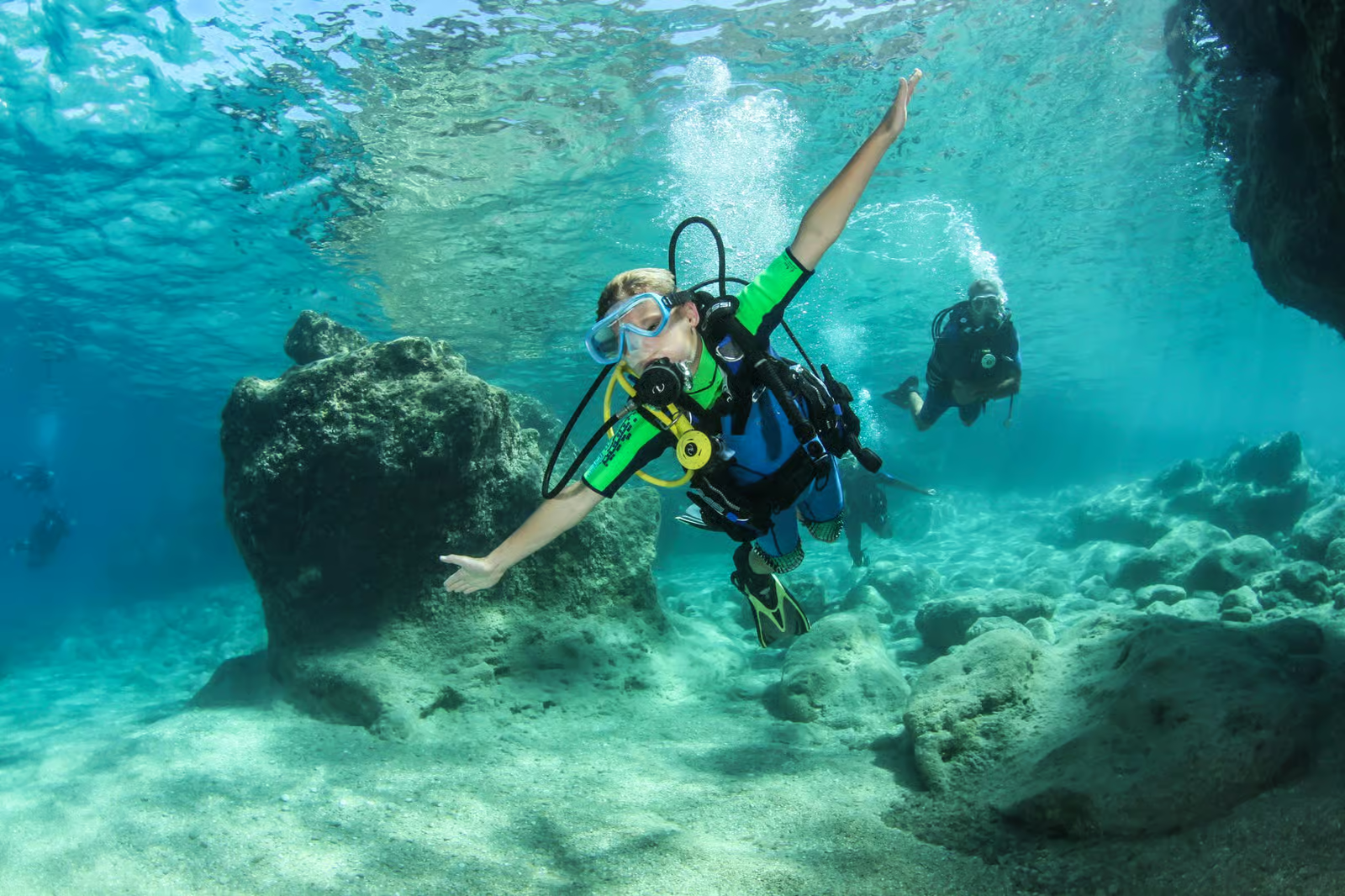
The Chania area is one of the places I would look at first if the underwater landscape itself is what interests you. Around Souda Bay, Akrotiri and the coast towards Almyrida and Kolymbari, the limestone coastline continues beneath the surface in the form of rocky walls, caves and underwater passages. The famous Elephant Cave, near Almyrida, is particularly unusual because fossilised elephant remains were discovered there, giving what might otherwise be simply another Mediterranean cavern a remarkable connection with the island’s distant past. Other sites around Cape Spatha and Gramvousa add to the feeling that this part of Crete is about exploring the shape of the coast as much as looking for marine life.
What I like about this side of the island is that it feels connected to the Crete you see above the water. The coast here can be rugged and exposed, with mountains and bare rock dropping towards the sea, and underwater the landscape continues in much the same spirit. If you are staying in Chania and want your diving to feel like another way of discovering the region rather than an isolated activity squeezed between beach days, this is a particularly appealing base.
Heraklion, Agia Pelagia and Hersonissos: Easy Access and Plenty of Choice
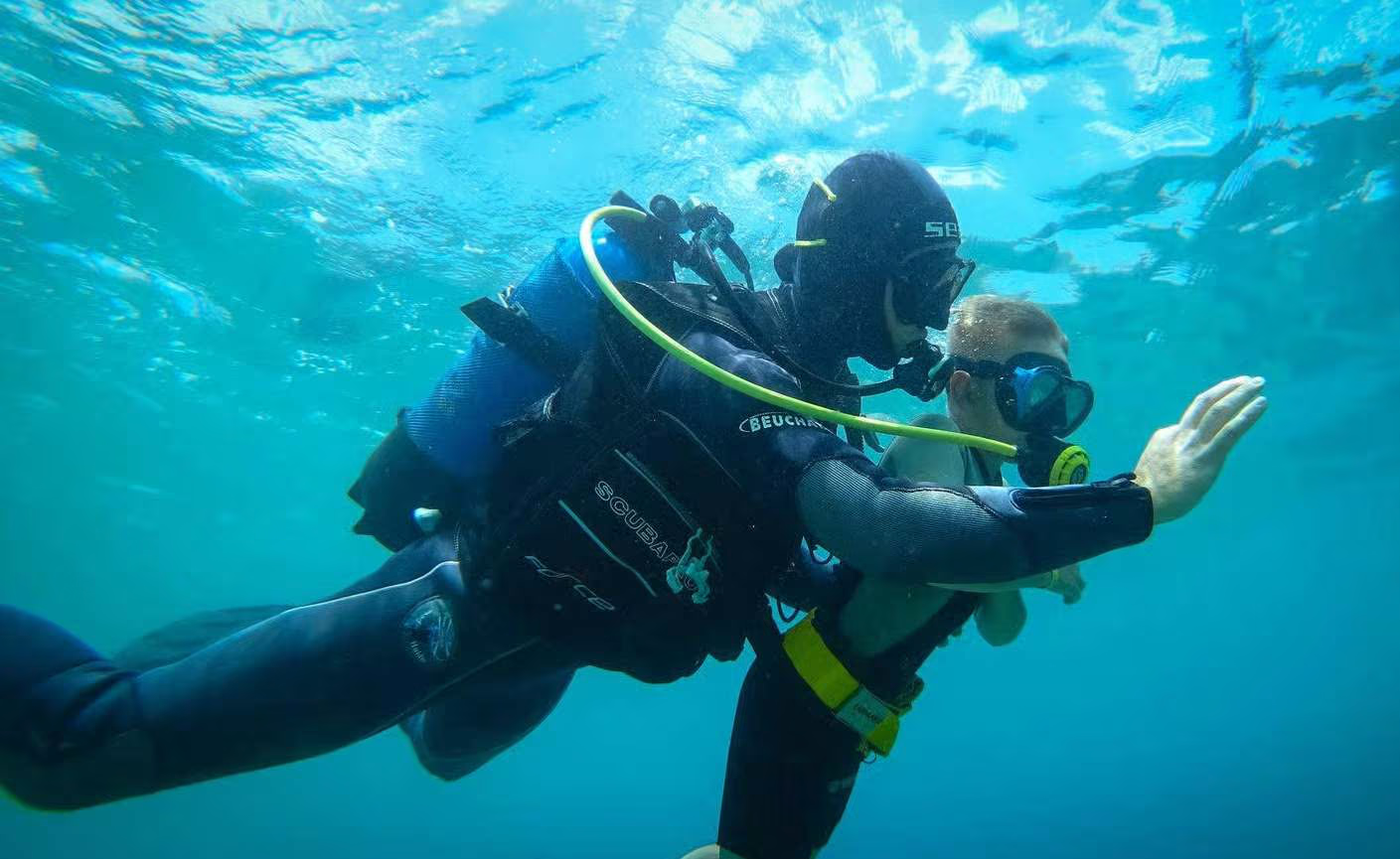
Further east, the coastline around Heraklion, Agia Pelagia and Hersonissos offers a very different kind of convenience. Agia Pelagia is especially well established for diving, with sheltered coves and sites ranging from shallow areas suitable for beginners to deeper walls, caverns and swim-throughs. It is also close enough to Heraklion to make diving relatively easy to combine with a conventional Crete holiday. You can stay by the sea, dive in the morning and still have most of the day ahead of you.
This area is also where you start finding some of the more distinctive dives of central Crete. The Messerschmitt wreck off Hersonissos is a very different experience from a shallow reef dive, while the waters around Dia Island offer dramatic drop-offs and exceptionally clear water on suitable days. Dia is reached by boat rather than being something you simply walk down to from the beach, which makes the trip feel more like a proper diving excursion. For an experienced diver, that difference can be part of the appeal.
Rethymno and the South: A Different Pace
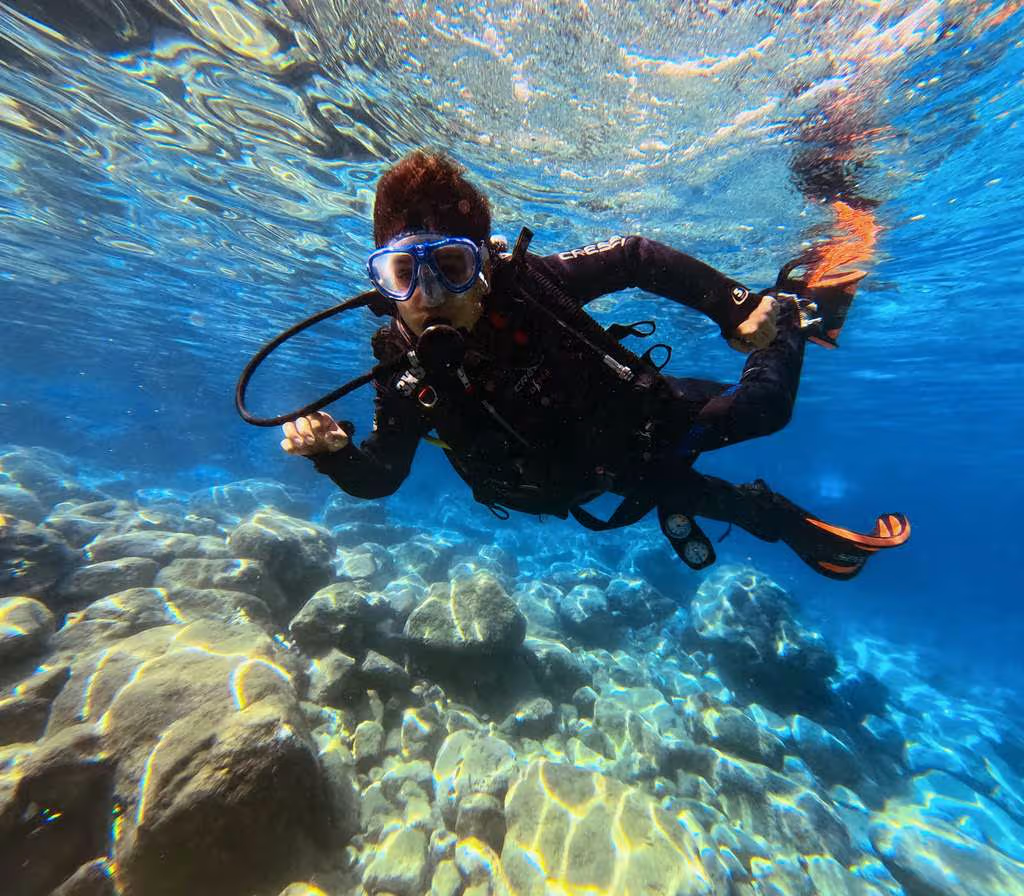
Rethymno is sometimes overlooked when people talk about diving in Crete, but it can be a useful base, particularly if you are already planning to explore the centre of the island. From here, diving excursions can reach the southern coast, including the area around Skinaria and Plakias, where the underwater scenery becomes particularly attractive. Skinaria is known for its rocky formations, caves and clear water, and the south coast has a somewhat different atmosphere from the busier northern shore.
There is something appealing about diving in the south because it feels less like an activity attached to a resort and more like an extension of a road trip through Crete. The landscape above the water is already dramatic, the coastline is less developed in places, and the underwater world has the same sense of being tucked away. If you are staying around Plakias, I would not automatically drive north simply because a guidebook has put a particular site on a “best of Crete” list. Some of the pleasure here is precisely in discovering what is close to where you are staying.
Agios Nikolaos, Elounda and Mirabello Bay
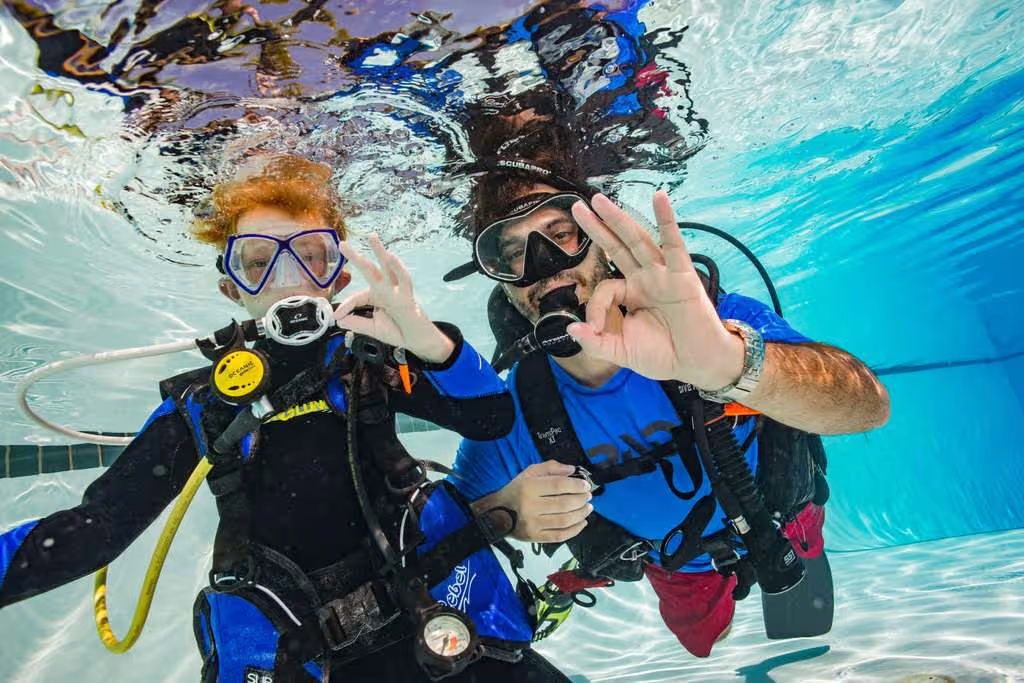
On the eastern side of Crete, the Mirabello Bay area around Agios Nikolaos and Elounda has its own character. The coastline is full of rocky formations, caves, reefs and sheltered areas, while the seabed also contains traces of the region’s long history. Elounda is particularly interesting if the idea of combining diving with underwater archaeology appeals to you: the remains associated with the ancient city of Olous can be explored in relatively shallow water, making this a very different experience from descending along a deep wall or visiting a wreck.
This is also an area where diving can fit very naturally into a more relaxed holiday. Agios Nikolaos and Elounda already offer plenty to do above the water, so you do not need to build your entire trip around scuba diving to make it worthwhile. And when the conditions are good, the clarity of the water and the variety of underwater terrain make Mirabello Bay one of the more interesting places to have several different kinds of dives without constantly changing your base.
So, Where Would I Base Myself?
If diving is the main reason you are coming to Crete, I would choose the base according to the kind of diving you actually want to do rather than simply looking for the area with the greatest number of dive centres. Chania makes sense if caves, rocky underwater landscapes and the northwest appeal to you. Agia Pelagia or the Heraklion area is probably the most versatile choice if you want easy access, beginner-friendly diving and some more unusual sites as your experience grows. Plakias and the south coast suit a quieter, more exploratory trip, while Agios Nikolaos and Elounda are particularly attractive if you want diving to be one part of a broader eastern Crete holiday.
And this is one of the mistakes I would avoid: trying to “see the best of Crete” underwater from a single hotel. You can certainly have good dives without moving around, but the island rewards you if you accept that its underwater world is regional too. A week split between two bases can give you a much better sense of how different the Cretan coast can feel — without turning your holiday into a race from one dive site to the next.
Find the perfect hotel near your dive spot
Click edit button to change this html
The Dives I Would Look For in Crete
What makes choosing a dive in Crete interesting is that the most memorable experience is not necessarily the one with the longest list of fish or the greatest depth. One day, it might be a cavern where the sunlight disappears as you swim inside. Another, it might be a steep wall falling away beneath you, with nothing but blue in front of your mask. And then there are the wrecks, which bring a completely different atmosphere. If you are planning several dives here, I would try to experience a mixture rather than booking the same type of site every day.
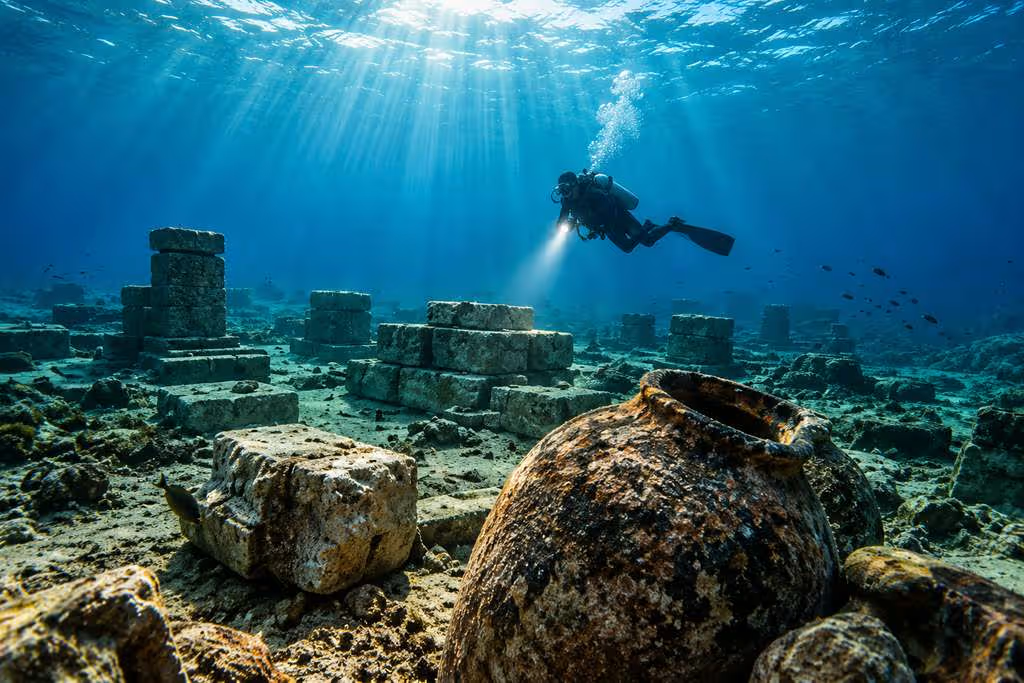
Caves and Caverns: Following the Light
Caves are among the dives that can make Crete feel particularly different. The island’s limestone geology has created plenty of underwater cavities, arches and overhangs, from small formations that you can explore comfortably on a recreational dive to more demanding environments reserved for appropriately trained divers. Even when you are simply swimming through a shallow cavern, the change is immediate. Outside, the water can be intensely bright; inside, everything becomes darker and quieter, and the entrance behind you frames the Mediterranean like a window.
You do not need to be a cave diver to enjoy this kind of underwater landscape. Many recreational sites involve caverns or swim-throughs rather than true cave diving, but the distinction matters. Never assume that a dark opening is something you should simply swim into. Depth, overhead environment, visibility and your certification all change the nature of the dive. For a first experience, I would much rather have a local instructor choose a suitable cavern than try to turn an ordinary recreational dive into an adventure.
Walls and Drop-Offs: The Feeling of Blue
There is another kind of dive I particularly like in Crete: the moment when the seabed simply seems to disappear. A rocky shelf ends, the wall drops away and suddenly you are looking into a much deeper blue. With good visibility, these dives can give you a wonderful sense of space without requiring anything technically complicated. You can stay close to the wall, watching for life in the cracks and ledges, while occasionally looking out into open water.
These are also the dives where visibility really becomes part of the experience. In a sea with poor visibility, a wall can feel like a small, enclosed environment. In clear Cretan water, it can feel enormous. You start noticing how far the rock continues beneath you and how the light changes with depth. For experienced divers, deeper wall dives can offer another level of exploration, but even a relatively shallow version can be memorable simply because of the landscape.
Wreck Diving: A Completely Different Atmosphere
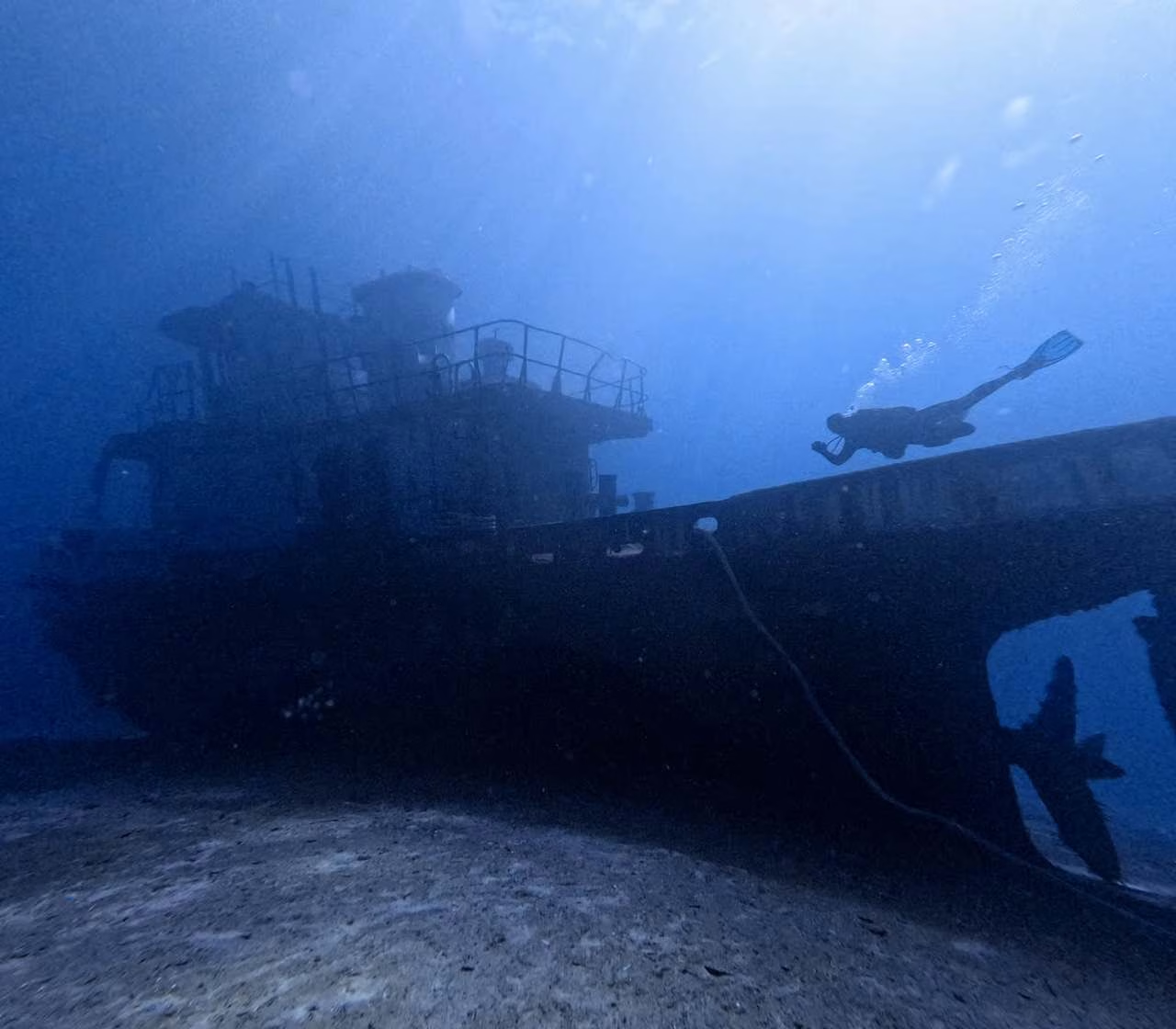
Wrecks bring something that reefs and rocky bottoms cannot quite reproduce. There is a story attached to them, even when you know very little about the vessel itself. The Messerschmitt wreck near Hersonissos is one of the better-known examples around Crete, and its shallow location makes it accessible to recreational divers under suitable conditions. Rather than expecting a huge shipwreck rising dramatically from the seabed, think of it as an underwater historical object that you explore slowly, looking at what remains and how marine life has gradually made the wreck part of its environment.
That is what makes wreck diving interesting in Crete. The wreck does not have to be enormous to create a sense of discovery. A piece of metal half-covered in marine growth, a recognisable section of the aircraft or an unexpected detail can hold your attention longer than a much more spectacular site if you are curious about what you are looking at.
Rocky Reefs and Mediterranean Marine Life
A large part of diving around Crete is simply exploring rocky seabed. It may sound less exciting than caves or wrecks, but these dives are often where you get the chance to slow down and actually observe the Mediterranean. The rocks are full of small hiding places, and once you stop swimming quickly from one point to another, you begin noticing how much is happening around you.
This is where you are most likely to appreciate the quieter side of Cretan diving: an octopus disappearing between stones, a moray eel watching from a crack, groupers holding their position beneath an overhang, or small fish moving above the reef. You have to look rather than wait for the underwater equivalent of a wildlife show. And that, in a way, is part of the pleasure.
Night Diving: When Crete Changes Completely
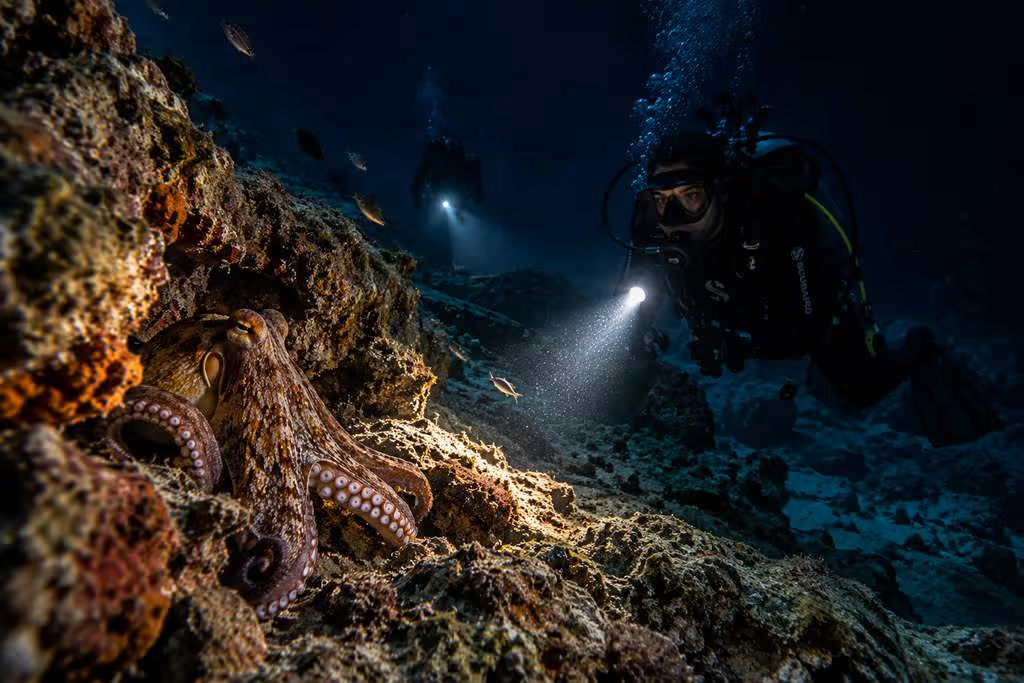
If you have the certification and experience for it, a night dive is one of the things I would seriously consider adding to a diving trip in Crete. The same site you visited during the day can feel almost unrecognisable after sunset. Your world becomes the narrow circle of light from your torch, and familiar rocks suddenly reveal different details.
Night diving also changes the pace. You tend to move more slowly, pay closer attention and become much more aware of the sounds and movements around you. Marine creatures that are difficult to notice during daylight may become more active, while the darkness itself creates an atmosphere that you simply cannot reproduce on a daytime dive.
Shore Diving: Sometimes the Simplest Dives Are the Best
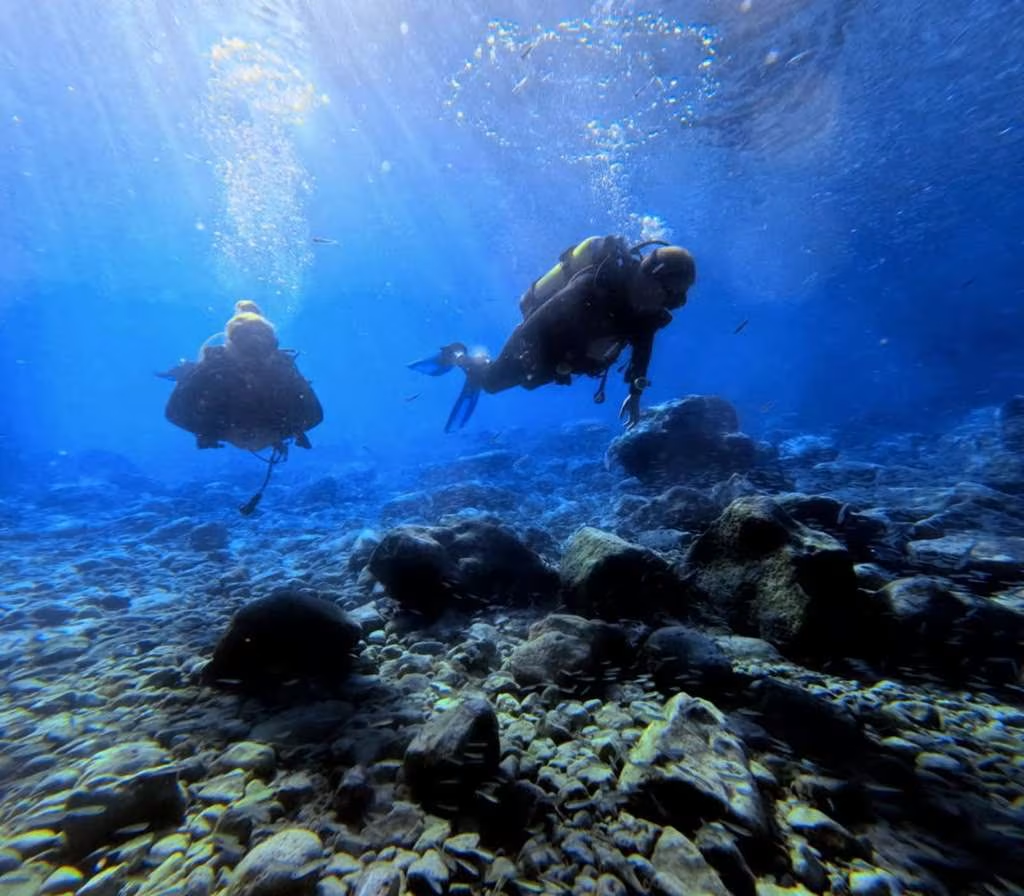
Finally, do not assume that the most worthwhile diving in Crete always involves getting on a boat. Shore diving can be one of the easiest ways to fit scuba into an island holiday, particularly if you are travelling with people who are not divers or simply want the freedom to keep the rest of the day flexible. Some coastal sites offer surprisingly interesting underwater terrain without the logistics of a boat trip.
I would not choose between shore and boat diving on the basis of which one sounds more adventurous. I would choose according to the site. If a boat takes you to an isolated wall, island or wreck that would otherwise be impossible to reach, it is worth it. If a sheltered shore dive gives you clear water, interesting rock formations and the chance to take your time, there is no reason to consider it the lesser option. In Crete, sometimes the best dive is simply the one that lets you stay underwater a little longer.
Your First Dive in Crete: What It Feels Like to Go Under for the First Time
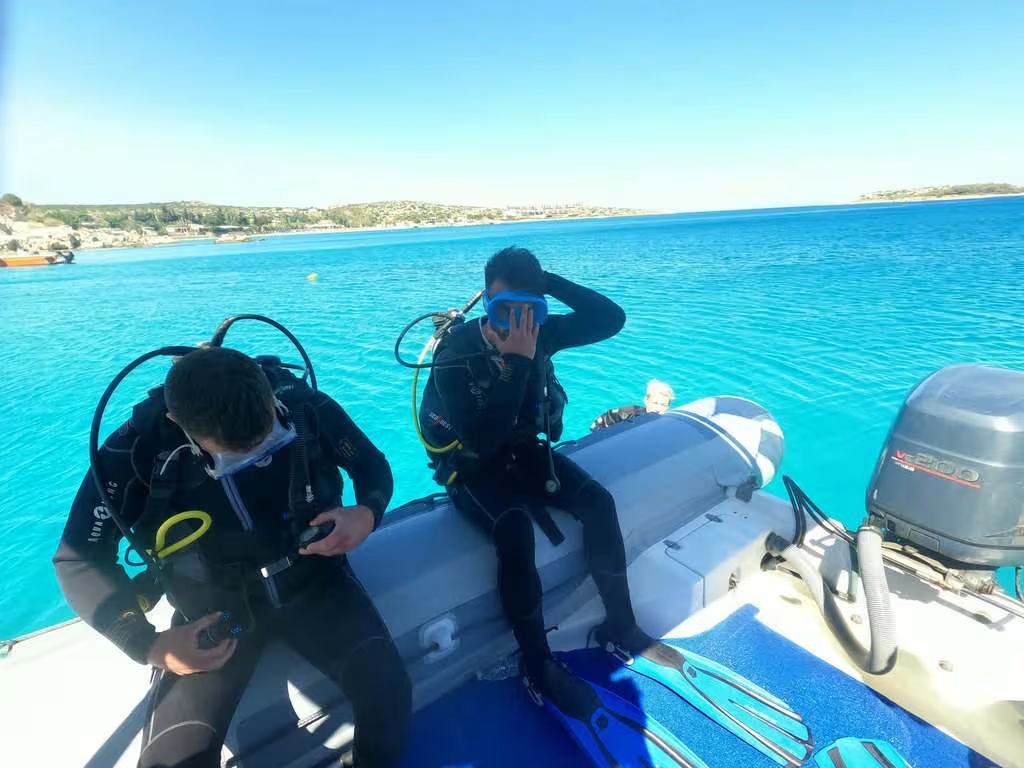
If you have never scuba dived before, Crete can be a surprisingly good place to try it. The idea can seem more intimidating than the reality: you are standing on a beach or climbing onto a boat with equipment that initially feels unfamiliar, wondering whether breathing underwater is really going to feel as natural as everyone tells you it will. Then you put your face in the water, take that first breath through the regulator, and the whole experience becomes much quieter.
A first dive in Crete will normally begin with a briefing and some basic instruction before you go properly underwater. You will learn how to breathe, clear your mask, equalise your ears and communicate with your instructor using hand signals. The instructor should stay close throughout the dive, particularly if you are doing a Discover Scuba Diving experience rather than taking a certification course. You do not need to arrive knowing how to operate all the equipment. That is precisely what the briefing and the instructor are there for.
Once you are underwater, the biggest adjustment is usually not the equipment but the sensation of breathing in a completely unfamiliar environment. It takes a little time to stop thinking about every breath. Then something changes. You look around and realise that the surface is above you, the noise of the world has disappeared, and you are moving through a landscape you could never see from the beach. In clear Cretan water, that first view can be particularly rewarding because you may have surprisingly good visibility even on a relatively shallow beginner dive.
You also do not need to be an experienced swimmer to become a diver, but you should be comfortable enough in the water to feel safe. A reputable centre will assess whether the experience is appropriate for you rather than simply putting everyone into the sea regardless of ability. If you are nervous, say so. There is nothing embarrassing about it, and a good instructor would much rather know that you are anxious before you enter the water than discover it once you are underwater.
For a first experience, I would also resist the temptation to choose a dive simply because it appears on a list of Crete’s most spectacular sites. Your first dive is about discovering whether you enjoy being underwater. A calm, shallow site with good visibility and an instructor who does not rush you can be far more memorable than a technically impressive location where you spend the entire dive worrying about what you are supposed to be doing.
If you enjoy that first experience, you can then decide whether you want to go further and take a proper scuba certification course during your stay. That is a very different commitment from a one-off Discover Scuba experience, but Crete gives you the opportunity to turn a holiday experiment into something you can continue long after you have left the island. And for some people, that first quiet moment beneath the surface is enough to change the way they look at the sea for good.
If You’re Already a Certified Diver
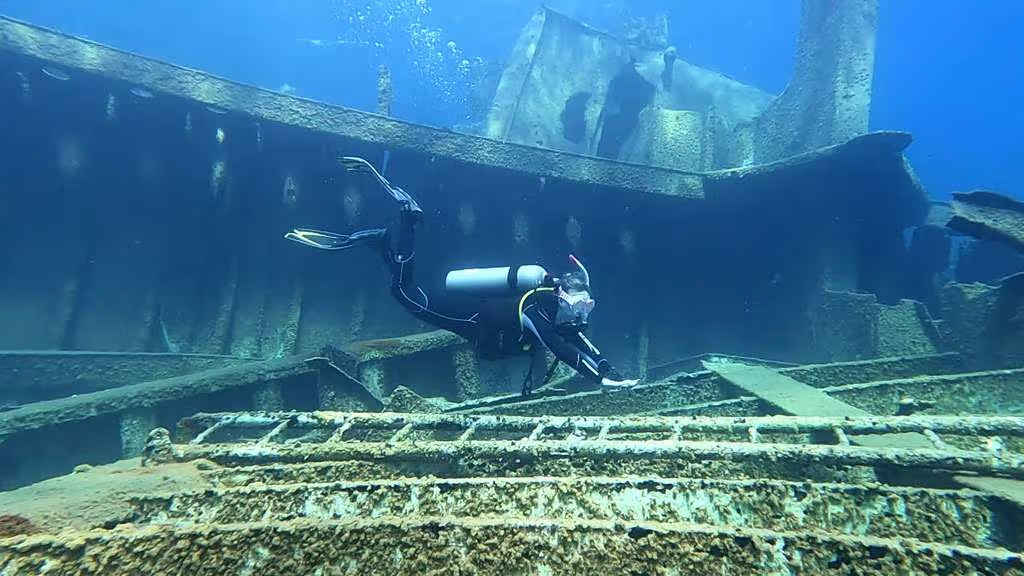
If you already have a few dives behind you, Crete becomes a rather different proposition. You are no longer wondering whether you can breathe underwater or how to clear your mask. Instead, you can start choosing dives because of what they offer: a particular wall, a cave, a wreck, an island offshore, or simply a stretch of coastline where the visibility makes the underwater landscape worth exploring. And this is where I think Crete becomes more interesting than it might first appear.
The island is not a place where every dive site is designed to impress an experienced diver. Some are deliberately shallow and easy, and that is part of their value. But there are enough deeper sites, walls, caverns, wrecks and more exposed locations to build a varied diving trip around them. The important thing is to tell the dive centre what you actually want from the experience. Saying that you are a certified diver is not quite enough. Tell them your certification level, recent experience, maximum depth, whether you are comfortable in caves or swim-throughs, and what kind of diving you enjoy. A good local centre will then have a much better idea of which sites make sense for you.
Beyond the Easy Dives
One of the pleasures of being certified is being able to look beyond the introductory dives. You can explore deeper sections of a wall, spend longer examining a rocky formation or visit sites that are simply not appropriate for someone making their first descent. But depth should not become the objective in itself. Some of the most enjoyable dives around Crete are relatively shallow precisely because the light is so good and the underwater landscape is easy to appreciate.
The same applies to caves. There is a big difference between swimming through a well-lit cavern on a recreational dive and entering an overhead environment that requires specific training and equipment. If you have cave-diving or technical qualifications, there may be opportunities to explore more demanding sites, but your certification needs to match the dive. I would never treat a cave or cavern simply as the next step after becoming an Open Water diver. In Crete, as anywhere else, the safest and most enjoyable approach is to let local conditions and your actual experience determine how far you go.
Boat Dives Open Up Another Crete
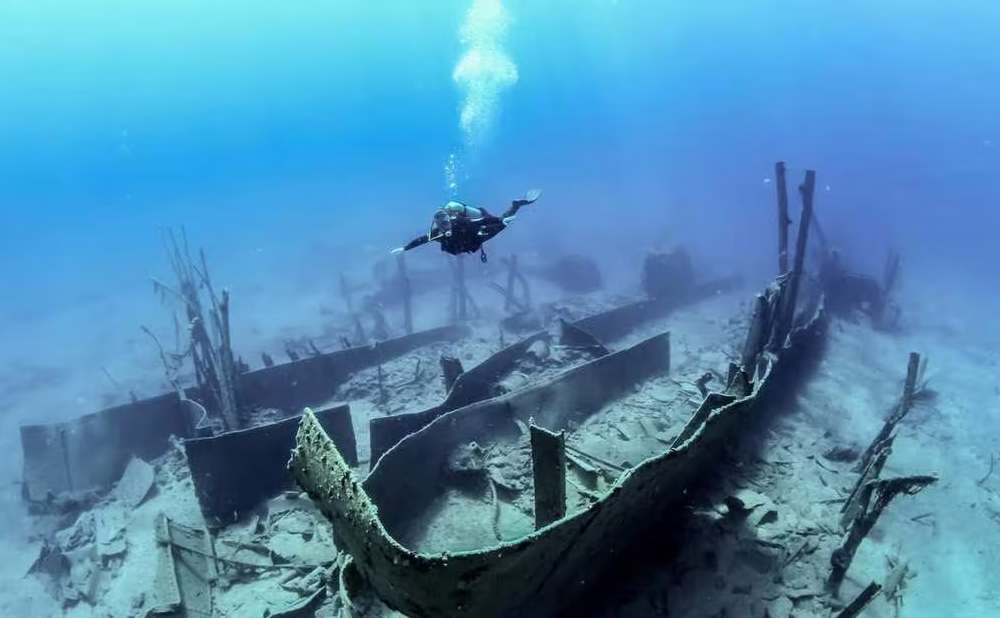
For an experienced diver, I would be more inclined to add a few boat dives to a trip rather than spending the entire holiday doing shore dives. Not because shore diving is inferior, but because a boat can take you to underwater landscapes that would otherwise remain out of reach. Islands such as Dia, offshore walls and particular wreck sites can turn a straightforward dive into something that feels more like an expedition, even when the diving itself is perfectly manageable.
There is also something enjoyable about the rhythm of a boat-diving day in Crete. You leave the coast behind, watch the landscape recede and eventually drop into water that can feel completely detached from the beaches and resorts. After the dive, you come back up into the enormous Mediterranean sky. It is one of those occasions when scuba stops feeling like an activity you have fitted into your holiday and becomes one of the ways you experience the island itself.
f You Want Something More Technical
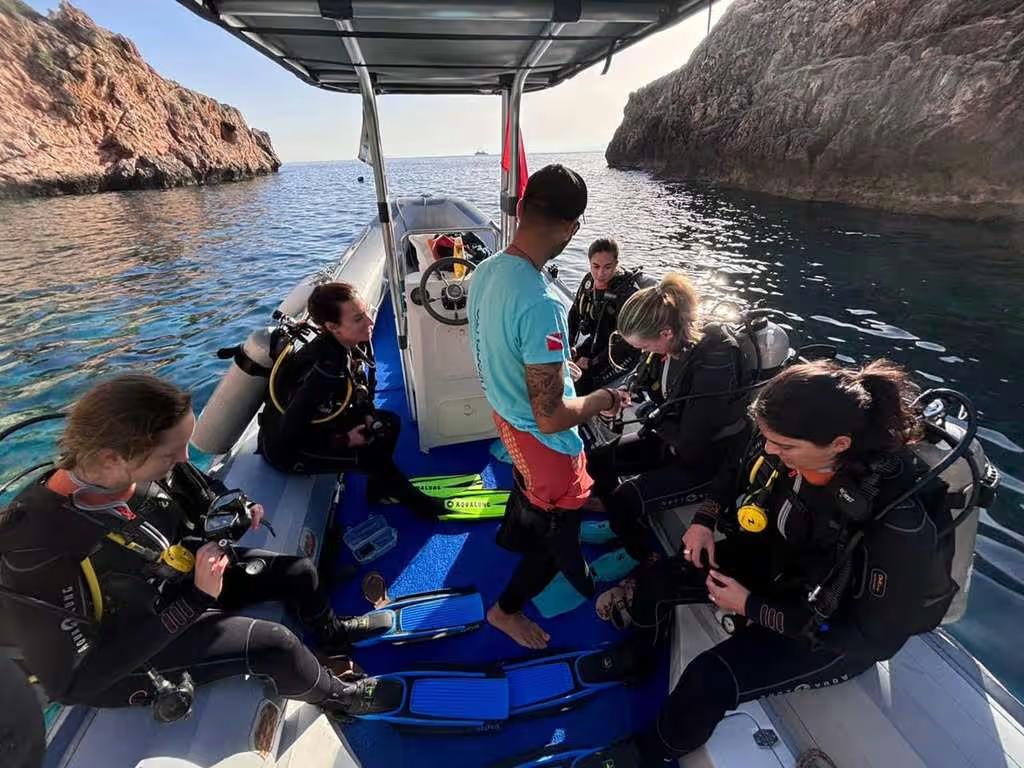
More experienced divers may also find opportunities for deeper dives, wreck diving, night diving and specialty training, depending on the area and the local operators. But this is where I would avoid booking purely on the basis of an impressive description online. Conditions, access, currents, visibility and the experience of the guide can all change what a particular site feels like on the day.
If you have advanced, rescue, technical or specialty qualifications, bring the relevant certification with you and be prepared to show it. If you have not dived for a long time, be equally honest about that. A certification card tells an instructor what you are qualified to do; it does not tell them how comfortable you will actually be after several years away from the water. A short refresher can be a much better start to a holiday than discovering halfway through a dive that your confidence has not quite kept up with your qualification.
Ultimately, I would approach diving in Crete as an experienced diver with a little curiosity rather than a checklist. Pick a couple of dives for the underwater landscape, perhaps add a wreck or an offshore site, and leave some room for whatever the local centre recommends. The best dive may not be the deepest one or the one with the most impressive name. Sometimes it is simply the site where the water is exceptionally clear, the conditions are calm, and you come back onto the boat wishing you had another hour underwater.
When to Dive in Crete: Chasing the Clear Blue
Crete is one of those places where the season changes the experience more than you might expect. The diving season stretches well beyond the hottest weeks of summer, but the sea does not feel the same in May as it does in August, and September can be a very different proposition from either. If diving is an important part of your trip, I would not simply choose your dates according to the weather on land. The temperature of the water, visibility, wind and how busy the coast is all become part of the decision.
Spring: Quiet Seas and a Fresher Mediterranean
By late spring, the sea is becoming increasingly inviting, although it can still feel noticeably cool compared with the height of summer. May and early June can be particularly pleasant if you want to combine diving with exploring the island without the intensity of the July and August crowds. The air can already be warm and sunny while the water reminds you that summer has not quite arrived underwater.
For experienced divers who are comfortable with a wetsuit, this can be an appealing time to come. The island feels calmer, accommodation is generally easier to find, and you are not spending every day surrounded by peak-season visitors. For a first-time diver, however, I would be more inclined to choose the warmer part of the season unless you are particularly comfortable in cooler water.
Summer: Warm Water and the Busiest Time
July and August are the obvious choice if your idea of Crete involves hot days, warm sea and as little concern as possible about getting cold between dives. Water temperatures can climb into the mid-20s °C, making longer days in the water much easier to enjoy. The downside is that these are also the busiest months on the island, particularly around the major resorts and popular beaches.
The summer weather deserves a little attention too. Crete is famous for its strong summer winds, especially the meltemi, and a calm-looking morning does not guarantee identical conditions later in the day. Dive centres make their decisions according to the local conditions and the particular site, which is another reason I would not book a trip around one specific offshore dive without leaving some flexibility in the itinerary.
September and October: The Season We Would Choose
If I had to pick a period specifically for a diving trip to Crete, I would seriously consider September and the beginning of October. The sea has had the entire summer to warm up, the air remains pleasantly warm, and the island begins to lose some of the intensity of the August crowds. You can still have the feeling that summer is very much alive without quite the same pressure on the roads, beaches and restaurants.
There is also something particularly enjoyable about being in the water at this time of year. After a long, hot summer, the Mediterranean is warm enough to make getting in effortless, while the landscape above the surface begins to feel quieter. You can have a morning dive, come back to shore and still have an entire afternoon for a village, a mountain road or a long lunch somewhere by the sea.
Winter: Possible, but a Different Kind of Trip
Winter is another matter. The sea around Crete does not suddenly become undiveable, and diving can take place outside the traditional tourist season, but the choice of operators and excursions becomes much more limited. Weather and sea conditions also play a greater role, and the experience is less predictable for someone planning a conventional diving holiday.
Unless you specifically enjoy cold-water diving, have a reason to visit Crete in the quieter months, or are arranging something with a centre that operates year-round, I would not choose winter simply to save money or avoid tourists. Crete is wonderful in winter for other reasons, but if scuba is one of the main purposes of the trip, the longer and more established diving season makes planning considerably easier.
Beneath the Blue: The Wild Life of Crete’s Seas
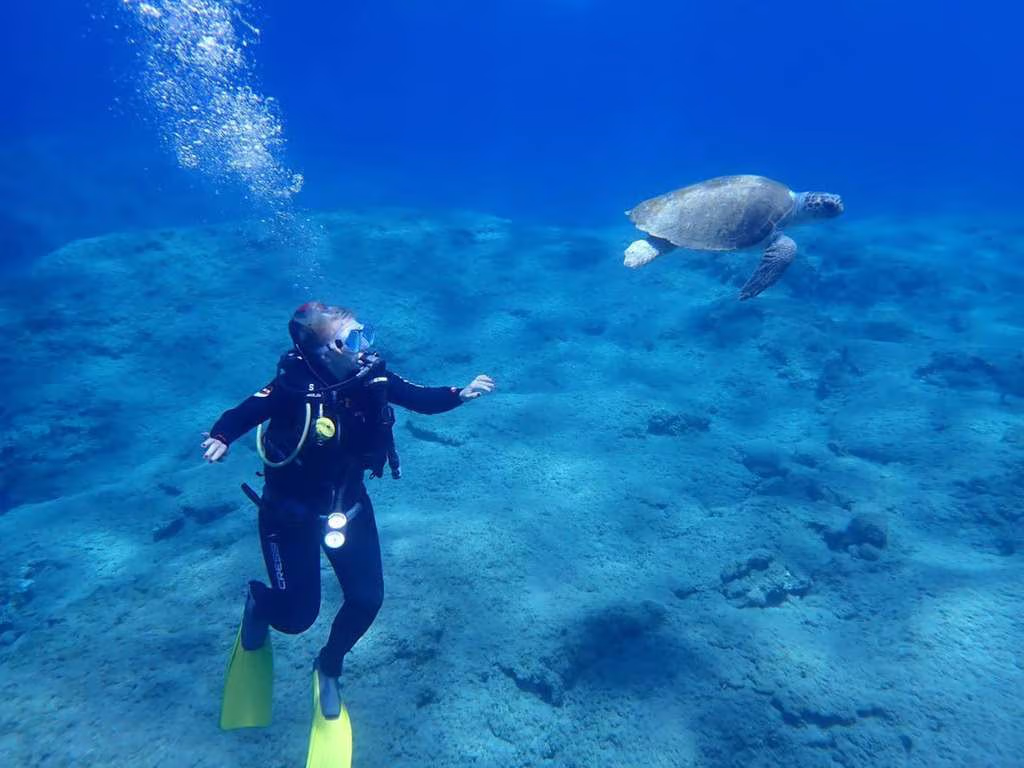
If you come to Crete expecting the underwater equivalent of a tropical reef, you may initially wonder where all the colour has gone. The Mediterranean has a quieter palette. There are fewer moments of overwhelming abundance, fewer clouds of brilliantly coloured fish, and no coral gardens spreading in every direction. But once you stop looking for the Red Sea and start looking at the Mediterranean on its own terms, the underwater world becomes much more interesting.
Octopus are among the encounters I would most hope for. They can be remarkably difficult to spot until you learn to look for them, tucked into holes in the rocks or almost perfectly matching their surroundings. Then there are moray eels, often watching from the darkness of a crevice with only their heads visible. Groupers can appear beneath ledges, while wrasse, sea bream and other smaller fish move continuously around the rocky seabed. None of this is necessarily dramatic from a distance, but underwater, when you are close enough to watch an animal behaving naturally, it can be far more rewarding than simply ticking a species off a list.
The rocky landscape itself is often just as interesting as the animals living in it. Crevices, overhangs and small caves create dozens of places for marine life to hide, and a slow dive can reveal things that you would completely miss if you were swimming quickly from one attraction to another. Sponges and other marine organisms add colour to the rock, while smaller creatures can turn an apparently empty section of seabed into something worth examining for several minutes. This is one of those situations where having a good guide can make a genuine difference. Someone who knows the site will often see things that a visitor swimming past simply doesn’t.
You may also encounter barracuda and larger fish in suitable locations, while the lucky diver can occasionally come across turtles or other less predictable visitors. These encounters should be treated as exactly that: encounters, rather than guaranteed attractions. Marine life is wild, and one of the quickest ways to make diving disappointing is to arrive expecting a particular animal to appear on schedule.
For underwater photographers and divers who enjoy macro life, Crete can be particularly satisfying. The clearer water gives you excellent opportunities when the conditions cooperate, but you also need to adjust your expectations. This is not necessarily a destination where every dive produces a spectacular photograph. Instead, it rewards patience: looking into cracks, examining the rock carefully and spending time with the small creatures that most people swim straight past.
And perhaps that is the nicest thing about the marine life here. You are not constantly waiting for something enormous to happen. A dive can be memorable because you noticed an octopus changing colour, found a moray eel hidden deep inside a rock, or suddenly realised that what looked like an ordinary patch of seabed was full of life. Crete asks you to pay attention. Once you do, there is considerably more beneath the surface than you might have expected.
What Does Diving in Crete Cost? Planning the Budget Without the Surprises
Scuba diving in Crete is not particularly cheap, but it does not have to take over your holiday budget either. For a single dive for a certified diver, expect roughly €65–€80, while a two-dive outing will usually be around €110–€150. The price depends mainly on whether you are diving from the shore or a boat and whether equipment is included. Some centres include the full kit in the advertised price, while others charge separately, so always check before comparing two apparently similar offers.
For a Discover Scuba Diving experience, a realistic budget is around €90–€120 for a first dive, usually including the equipment and instruction. If the experience involves a boat and two dives, expect closer to €140–€160. This is a good option if you are curious about scuba but do not want to spend several days taking a certification course.
If you are already certified and plan to dive several times, packages usually offer better value. A day with two boat dives can cost around €110–€145, while several-dive packages can bring the price per dive down further. For a short diving holiday, I would budget approximately €250–€400 for four to six dives, depending on the sites, whether you need equipment and how much boat diving is involved.
Training is obviously a larger investment. An Open Water certification generally costs around €470–€650, depending on the centre and what is included. Some prices include the learning materials, certification fees and complete equipment, while others list some of these separately. If you are thinking of getting certified in Crete, compare the complete package rather than choosing the cheapest headline price.
There can also be smaller extras. Nitrox, night dives, dive computers, additional equipment and transfers may all cost extra. A night dive, for example, can be around €80–€100, while nitrox may add roughly €7–€10 per dive. None of these costs is enormous on its own, but they start to matter if you are planning a full week underwater.
For a normal holiday, I would therefore allow about €100–€150 for a two-dive trip, around €300 for several dives over a few days, or €500–€650 if you want to become a certified diver during your stay. These are useful figures to keep in mind when planning your trip, although prices vary between centres and locations.
And this is one activity where I would not automatically choose the cheapest option. A few euros saved are not worth much if you end up in a large group with tired equipment and a rushed dive. I would look instead at what is included, the size of the group, the condition of the equipment and the experience of the instructors. With scuba diving, the quality of the experience matters considerably more than getting the lowest possible price.
Choosing a Dive Centre in Crete: The People Matter as Much as the Sea
Choosing where to dive in Crete is not simply a matter of finding the centre with the best-looking website. The island has plenty of operators, and two centres offering what appears to be the same two-dive trip can provide quite different experiences. Group size, equipment, the boat, the sites they visit and, above all, the way the instructors run the dives can make a noticeable difference.
For a beginner, I would put the instructor ahead of almost everything else. You want someone who is willing to explain things properly, stays close underwater and does not make you feel that you are holding up the rest of the group. A first dive should not feel like being processed through an excursion. If you are nervous, tell the centre when you book. A good instructor will understand that a person’s first few minutes underwater can be more important than squeezing another few metres of depth into the dive.
For certified divers, I would ask more specific questions before booking. What sites are planned? Is the dive from the shore or boat? How large is the group? Is a guide included? Is the equipment included in the price? What happens if weather conditions make the planned site unsuitable? These questions may seem mundane, but the answers tell you quite a lot about how professionally a centre operates.
I would also pay attention to the equipment. You do not need the newest gear in existence, but regulators, BCDs, wetsuits and cylinders should be properly maintained and appropriate for the dives you are doing. If you are bringing your own equipment, tell the centre in advance so you know exactly what you will and will not need to rent. If you need a computer, thicker wetsuit or other specialist equipment, confirm availability rather than assuming everything will be waiting for you when you arrive.
Small Groups Make a Difference
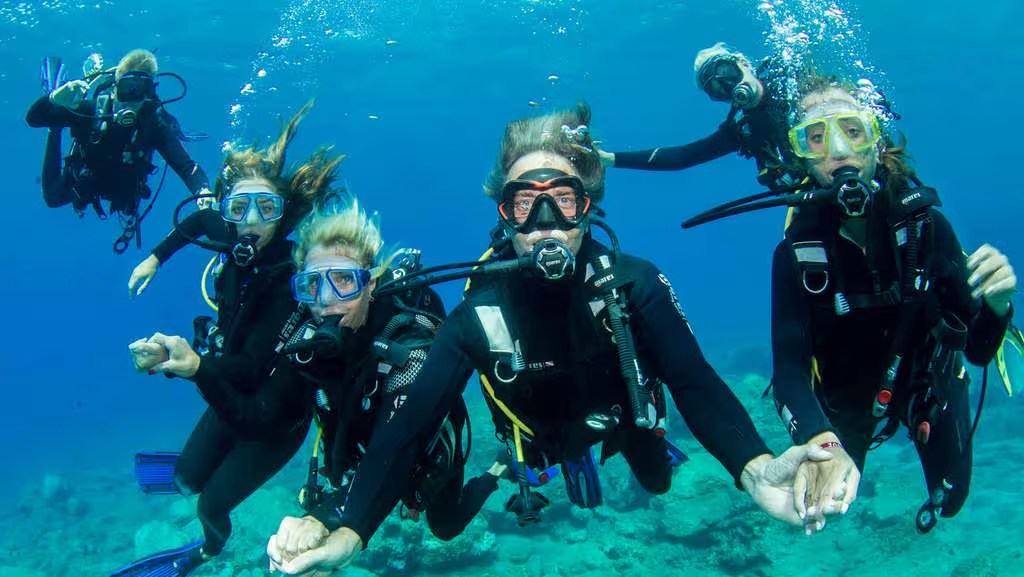
One of the things I would actively look for is small groups, particularly if you are an experienced diver who wants to enjoy the site rather than spend the dive following a crowd. A smaller group makes it easier to move at a comfortable pace, stop when something interesting appears and communicate with the guide.
This matters even more on sites with caves, swim-throughs or interesting rock formations. If ten or fifteen divers enter the same area one after another, much of the atmosphere disappears. With a small group, you can actually stop and look. You also get more of the instructor’s attention, which is valuable whether you are a beginner or simply unfamiliar with the local site.
Local Knowledge Is Worth Paying For
The best reason to dive with a local centre is not that they can take you underwater. You could do that in many places. It is that they know where to go on a particular day.
Wind, visibility, waves and currents can make one site disappointing while another a relatively short distance away is excellent. A local instructor who knows the coastline can change the plan accordingly. That flexibility is one of the advantages of diving with people who spend the season on the same stretch of coast rather than following a fixed tourist itinerary.
I would therefore be slightly suspicious of centres that promise exactly the same “best dive” regardless of weather or conditions. The sea gets the final word. A good operator should be comfortable changing the site when necessary and explaining why.
What I Would Check Before Booking
Before paying a deposit, I would check four things: what is included in the price, where you will actually dive, how large the group will be, and what happens if conditions prevent the planned dive. For beginners, I would add one more question: how much time is spent on instruction before entering the water?
Reviews can help, but I would read them for recurring details rather than simply looking at the star rating. Comments about patient instructors, well-maintained equipment, small groups and good communication are much more useful than someone saying that they “had an amazing day”.
There are enough good dive centres around Crete that you do not need to settle for an operator that makes you uncomfortable. Choose the people first, then the dive site. The Mediterranean will still be there, but having a calm, knowledgeable local guide beside you can completely change what you see when you finally descend.
Before You Dive in Crete: The Practical Things You Need to Know
There is not much bureaucracy involved in scuba diving in Crete, but there are a few things worth knowing before you turn up at a dive centre. Whether you are booking your first underwater experience or returning as a certified diver, the rules are slightly different depending on what you want to do.
Do You Need a Diving Certification?
Do you need a permit to scuba dive in Crete? The answer is generally no for ordinary recreational diving with a recognised dive centre. You do not need to apply for a separate diving permit simply to join a normal guided dive or a Discover Scuba Diving experience. The important distinction is between being certified to dive and having permission to dive at a particular site.
If you have never dived before, you do not need a scuba certification for a Discover Scuba Diving experience. You will dive under the direct supervision of an instructor, usually in shallow water and at a site chosen specifically for beginners. This is a supervised introduction to scuba, not an independent diving qualification.
If you are a certified diver, you can join recreational dives appropriate to your qualification and experience. Bring your certification card or digital proof, as the dive centre will normally need to verify your level before deciding which sites and depths are suitable.
Where things become different is with protected archaeological sites and certain wrecks or restricted areas. Greece has specific regulations governing underwater archaeological sites, and some locations require official permission or can only be visited through authorised arrangements. You should never assume that being a certified diver gives you the right to explore any archaeological site you find underwater. If you want to visit one of Crete’s designated archaeological diving sites, book through an operator that is authorised to organise those dives.
So, for most visitors, the rule is simple: no special permit is needed for a normal recreational dive, but you do need the appropriate certification for independent certified diving, while certain protected sites have additional access rules. If you are unsure about a particular wreck, archaeological site or restricted area, ask the dive centre before entering the water rather than trying to find out once you are already there.
Can Beginners and Non-Swimmers Dive?
You do not need to be an exceptional swimmer to try scuba diving, but you do need to be comfortable in the water and physically capable of participating safely. Requirements depend on the programme. For example, PADI’s Open Water certification requires candidates to demonstrate basic swimming and floating abilities, while a Discover Scuba experience has different requirements. A dive centre may also have its own rules depending on the site and conditions.
For a first dive, I would be honest about your swimming ability and any nervousness when you book. There is no advantage in pretending to be more confident than you are. A good instructor can adapt the experience; a dive centre cannot do that if it does not know what you are comfortable with.
How Old Do You Have to Be?
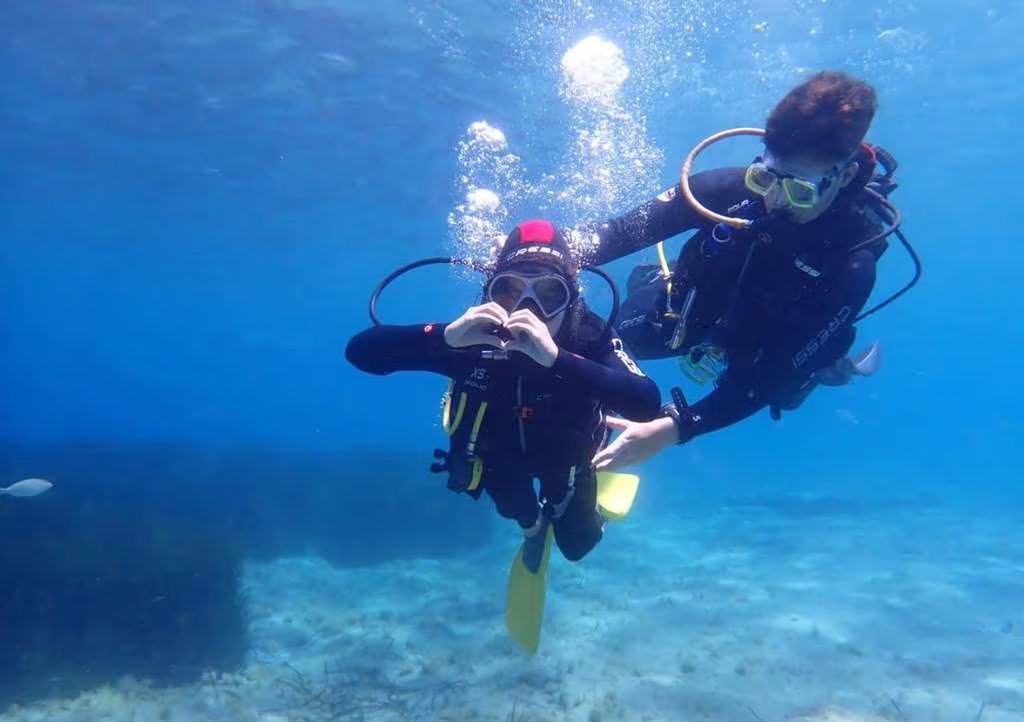
The minimum age for many PADI introductory and entry-level programmes is 10 years old, although the exact programme and operator matter. Children also need to meet the relevant medical and water-skill requirements, and younger divers are subject to additional depth and supervision restrictions.
For families, I would therefore contact the centre before booking rather than assuming that a child’s age alone is enough. Ask which programme is appropriate, how the children are grouped, and whether the planned site is particularly sheltered.
Do You Need a Medical Certificate?
You will normally be asked to complete a diving medical questionnaire. A medical certificate is not automatically required for everyone, but certain answers on the questionnaire can mean that you need medical clearance before diving. This is particularly important if you have a relevant medical condition or a history of problems affecting the ears, lungs, heart or other systems involved in diving.
Do not treat the questionnaire as paperwork to get through as quickly as possible. If you are unsure about a medical question, ask the dive centre or a doctor familiar with diving medicine. And if you are unwell on the day — particularly with congestion or an ear problem — tell the instructor before getting into the water.
What Should You Bring?
Most dive centres can provide the essential scuba equipment, so you do not need to travel to Crete with a suitcase full of diving gear. For a normal recreational trip, I would bring your swimsuit, towel, water, sun protection and any personal diving equipment you prefer to use, plus your certification card if you are already qualified.
If you have your own mask or dive computer, it can be worth bringing them simply because you already know that they fit and work for you. Otherwise, ask the centre exactly what is included in the rental package. Equipment packages vary, and items such as dive computers, torches or specialised equipment may not automatically be included.
How Long Does a Dive Trip Take?
A single shore dive can take only a few hours once you include the briefing, equipment preparation, entry and return. A two-dive boat trip will normally take up a much larger part of the day, with travel to the site and a surface interval between dives. Certification courses obviously require considerably more time.
This is worth considering when planning the rest of your day. I would not book a morning dive and then schedule something time-critical immediately afterwards, particularly if you are unfamiliar with the centre. Boats run according to sea conditions, equipment takes time to prepare, and a relaxed diving day is much more enjoyable than watching the clock.
Should You Book in Advance?
For a single dive, you may find availability at short notice, particularly outside the busiest months. But I would book ahead in July and August, especially if you want a particular site, a small group, a boat trip or a certification course. This is even more important if several people are travelling together.
When booking, give the centre your certification level, approximate number of recent dives and the kind of experience you are looking for. A good operator can then suggest an appropriate site rather than simply selling you the next available excursion.
What Happens If the Weather Is Bad?
The dive centre should have the final say. Crete can have beautiful weather on land while wind and sea conditions make a particular dive site unsuitable. In that situation, the operator may move you to another site, change the itinerary or postpone the dive.
I would see that as a positive sign. A centre that refuses to dive a site because conditions are wrong is doing exactly what you want it to do. Ask about the cancellation and rescheduling policy before paying, particularly for a boat trip.
What If You Have Not Dived for Years?
Your certification does not simply disappear because you have not been underwater for a while, but your practical skills can become rusty. If it has been several years since your last dive, tell the centre when you book. A refresher programme can review the basic skills and get you comfortable with the equipment again before you join a normal guided dive. PADI’s ReActivate programme is specifically designed for this situation, and refresher options are available in Crete.
Personally, I would much rather spend a little extra time refreshing my skills than spend the first dive of a holiday trying to remember how everything works.
What Certification Do You Need for Deeper, Wreck or Cave Dives?
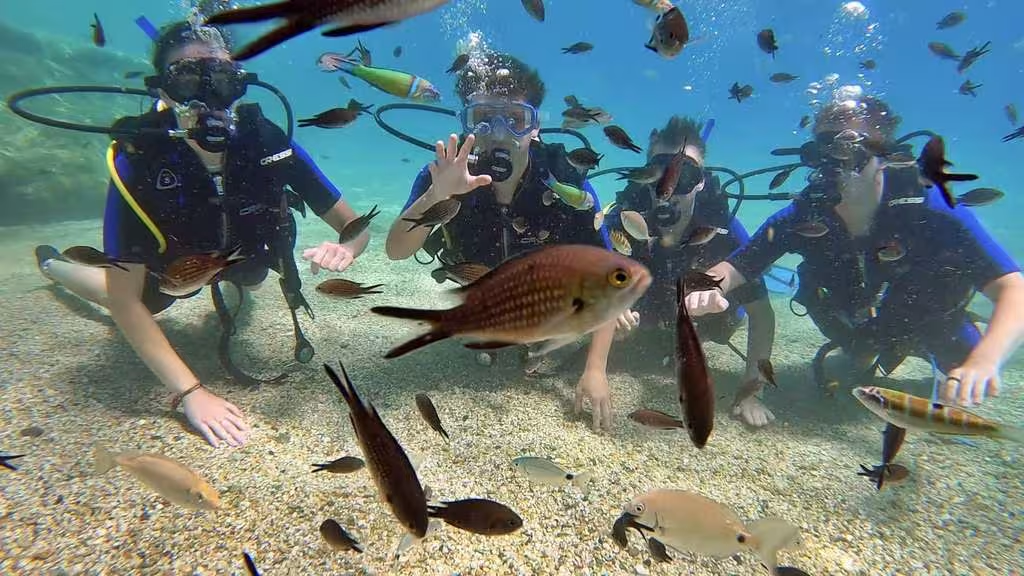
Your certification level matters once you move beyond ordinary recreational dives. With a standard PADI Open Water Diver certification, for example, you are trained to dive to a maximum of 18 metres. An Advanced Open Water Diver certification extends that training to 30 metres, while a Deep Diver specialty can take you to the recreational limit of 40 metres. Other agencies use different names, but the principle is the same: the depth of a particular dive should be within both your certification and your actual experience.
For wreck diving, it depends on what you are actually doing. If the wreck is shallow and you are simply diving around the outside, an Open Water certification may be sufficient, provided the depth and conditions are within your qualification and the local dive centre accepts you for the site. If you want to enter the wreck, that is a different matter. You need specific wreck-diving training covering hazards, navigation and penetration procedures; PADI’s Wreck Diver specialty, for example, requires Advanced Open Water or equivalent training.
The same distinction is even more important with caves and overhead environments. Swimming into a cavern where there is still a clear, direct route back to open water is not the same as entering a true cave. Recreational cave or cavern diving has specific limits, while true cave penetration requires dedicated cave-diving training, equipment and procedures. An Open Water or Advanced Open Water certification on its own does not qualify you to explore a cave simply because the entrance looks accessible.
So, as a practical guide: Open Water → up to 18 m; Advanced Open Water → up to 30 m; Deep Diver or equivalent specialised training → up to 40 m recreationally. Wreck penetration and cave diving require additional specialised training. These are useful benchmarks rather than permission to dive to those depths automatically. Your logged experience, the particular site, conditions, the dive centre’s requirements and the rules of the location all matter too.
Can You Dive Alone?
A certification does not automatically mean that you should plan to dive alone. Recreational diving is normally conducted with a buddy or under the supervision of a dive professional, and local conditions, site access and the operator’s procedures also matter. If you are travelling to Crete alone, simply tell the centre. They can place you with a suitable buddy or guide rather than leaving you to work out the logistics yourself.
What About Nitrox?
Nitrox is a breathing gas with a higher percentage of oxygen than ordinary compressed air. Standard air contains about 21% oxygen, while common recreational nitrox mixes contain around 32% or 36%. The main advantage is that, for many recreational dives, nitrox can reduce the amount of nitrogen your body absorbs, which can be useful when doing several dives over consecutive days.
It does not, however, mean that you can automatically stay underwater longer or dive deeper. Nitrox has specific depth limits because the higher oxygen concentration increases oxygen exposure at depth. You also need appropriate nitrox training before using it, and the cylinder’s oxygen mix must be analysed before the dive.
Some dive centres in Crete offer nitrox, usually for an additional fee. If you are planning several dives, particularly on consecutive days, it is worth asking about it when you book.
Can You Dive Before Flying Home?
This is one piece of planning that really matters on a Greek island holiday. Do not schedule your last dive immediately before your flight. DAN’s current recreational-diving guidance suggests a minimum surface interval of 12 hours after a single no-decompression dive and 18 hours after repetitive dives or several consecutive days of diving. After dives involving mandatory decompression, a substantially longer interval is considered prudent. Longer intervals provide an additional safety margin.
In practical terms, if you are flying home from Heraklion or Chania, I would normally make the day before the flight a non-diving day. It is simple, conservative and gives you some breathing room if your plans change.
Are There Special Rules for Underwater Archaeology?
Yes. This is particularly important in Crete because the island has an extraordinary amount of underwater cultural heritage. You cannot simply dive on an archaeological site, investigate ancient remains or collect objects because you happen to find them underwater. Greek legislation places restrictions on underwater activities involving breathing apparatus at protected underwater archaeological sites unless the required permission has been granted, and specific rules apply to designated sites.
This is another good reason to use a reputable local operator for archaeological dives. You can enjoy the history beneath the water without accidentally entering a protected area or disturbing something that has been there for centuries.